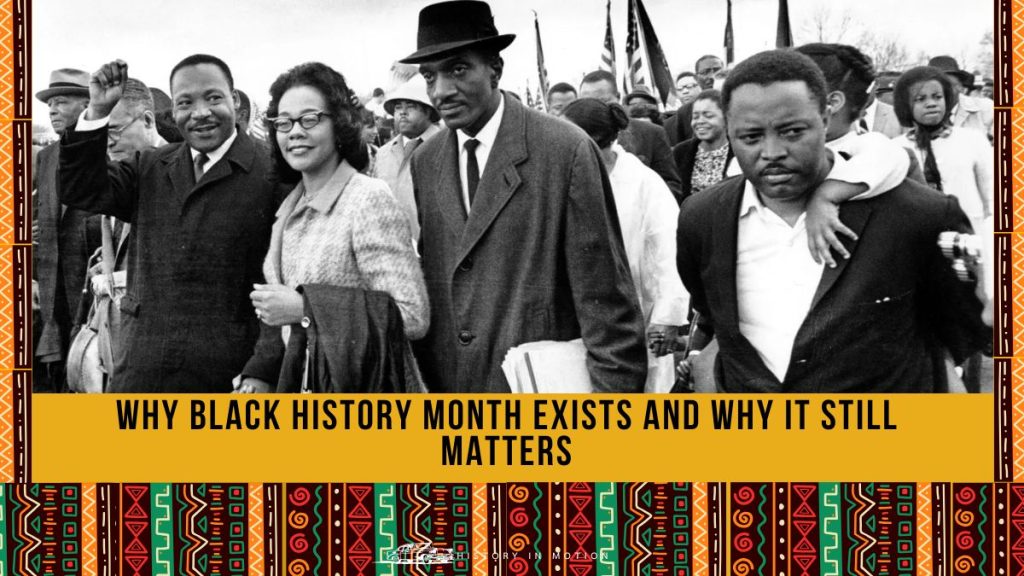
Every February in the United States, Black History Month returns to the public conversation. It shows up in classrooms, cultural spaces, workplaces, and online. Yet many people still ask a simple but important question: why does Black History Month exist, and why February?
The answer is rooted in history, intention, and the long fight to ensure Black stories are recognised as central, not optional.
The Origins of Black History Month
The story of Black History Month begins in 1915, more than half a century after the Thirteenth Amendment abolished slavery in the United States.
That year marked the 50th anniversary of emancipation, and historian Dr. Carter G. Woodson attended a national exhibition in Chicago that highlighted the achievements and progress of Black Americans since the end of slavery. While the exhibition celebrated Black advancement, it also revealed a troubling reality: Black history was still largely absent from formal education and historical records.
Woodson recognised that without intentional study and preservation, Black contributions would continue to be overlooked or erased. In response, he co-founded the Association for the Study of Negro Life and History (ASNLH) in 1915, now known as the Association for the Study of African American Life and History (ASALH).
The organisation was created with a clear purpose: to research, document, and promote the study of Black history.
In 1926, this work led to the establishment of Negro History Week, a designated time for schools, churches, and communities to focus on Black history and achievements. This observance laid the foundation for what would later expand into Black History Month, officially recognised in the United States in 1976.
Why It Is Called Black History Month
Black History Month exists because Black contributions were historically excluded from mainstream historical records. For generations, Black people appeared in textbooks only in limited or distorted ways, often reduced to narratives of slavery and oppression, while their achievements, leadership, creativity, and intellect were overlooked.
The purpose of Black History Month was never to separate Black history from world history. It was created to correct an imbalance and to make visible what had been ignored.
Black history is not an add-on. It is foundational.
Why February Was Chosen
Black History Month is observed in February because of a deliberate decision made nearly a century ago.
In 1926, historian Dr. Carter G. Woodson established Negro History Week. He chose February because it included the birthdays of Abraham Lincoln (February 12) and Frederick Douglass (February 14), two figures already widely honoured within Black communities for their roles in the fight against slavery and the pursuit of freedom.
By building on dates that were already meaningful, Woodson ensured the observance would resonate and gain traction. What began as a week later expanded into a full month, officially recognised in the United States in 1976.
The Man Behind Black History Month
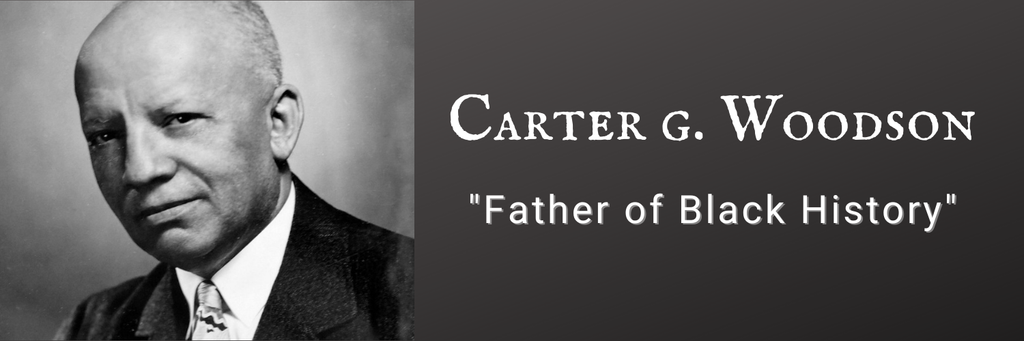
Dr. Carter Godwin Woodson is often referred to as the father of Black History Month, but his vision went far beyond a single observance.
Born in 1875 to formerly enslaved parents, Woodson understood how deeply the absence of historical knowledge could shape identity. He became one of the first Black scholars to earn a PhD from Harvard and dedicated his life to researching, documenting, and teaching Black history at a time when few institutions valued it.
Woodson believed that understanding history was essential to self-respect and progress. For him, Black history was not about the past alone. It was about empowerment in the present and possibility for the future.
The 2026 Black History Month Theme
The Association for the Study of African American Life and History (ASALH), the organisation founded by Woodson, continues to guide Black History Month in the United States.
The official 2026 theme is:
“A Century of Black History Commemorations”
This theme marks 100 years since the first Black history observance in 1926. It invites reflection on how Black history has been studied, celebrated, and preserved over the past century, and how those commemorations have shaped understanding of Black life, culture, and contributions.
It is both a moment of reflection and a reminder that the work of documenting and honouring Black history is ongoing.
Why Black History Month and Black History Matter
Black History Month is a time to honour the contributions and legacy of African Americans across U.S. history and society.
From activists and civil rights pioneers such as Marcus Garvey, Martin Luther King Jr., and Malcolm X, to leaders and innovators in politics, science, industry, education, arts, and culture, Black Americans have shaped the nation in profound and lasting ways.
Yet many of these stories were not fully taught, recorded, or celebrated. Black History Month creates space to recognise these contributions and to understand how Black history is inseparable from American history.
More broadly, Black history matters because history shapes identity. It informs how communities see themselves, how they are seen by others, and how futures are imagined. When history is incomplete, understanding is incomplete.
Why This Still Matters Today
Some ask whether Black History Month is still necessary. The reality is that while Black history should be engaged with all year long, recognition has not always been equal.
Black History Month serves as a reminder, a starting point, and an invitation. It encourages deeper learning, challenges incomplete narratives, and affirms that Black experiences are not marginal but essential.
At History in Motion, we believe history is not static. It lives in culture, conversation, and community. Understanding where we come from helps us navigate where we are and imagine where we are going.
Black History Month reminds us that history moves, and when we engage with it intentionally, it moves us too.
